Parsons Green upholstery cleaning guide for Fulham homes
If your sofa is starting to look a little tired, or the armchair by the window has that familiar patchy shade that sunlight and daily life create, you are in the right place. This Parsons Green upholstery cleaning guide for Fulham homes is written to help you understand what works, what to avoid, and when a professional clean is worth it. In homes across Fulham, upholstery takes a beating from pets, coffee cups, busy mornings, football boots by the door, and just normal living. The good news? Most fabric furniture can be revived with the right approach, and a bit of care goes a long way.
Below, you will find a practical, no-nonsense guide to upholstery cleaning in Parsons Green and the wider Fulham area. It covers methods, fabric types, common mistakes, and the decision points that really matter when you are trying to protect your furniture and keep your home feeling fresh.
Why Parsons Green upholstery cleaning matters
Upholstery is one of those things you stop noticing until it suddenly does not look right. A pale linen sofa can show every mark. A dark velvet chair can hold dust and pet hair like a magnet. And in Fulham homes, where space is often used hard and well, furniture usually serves more than one purpose: sitting, working, lounging, eating, entertaining, occasionally napping. That is exactly why regular upholstery care matters.
In Parsons Green, there is also the local rhythm of life to think about. Busy commutes, school runs, guests arriving for supper, the occasional wet umbrella leaning against the wrong thing. Truth be told, upholstery cleans are not just about appearances. They are about keeping fabrics healthier, reducing odours, and slowing wear on the fibres before little issues become expensive ones.
There is a difference between furniture that looks a bit dull and furniture that is starting to deteriorate. Dust and grit can act like fine sandpaper on fabric. Spills that are left alone can set into stains or leave a tide mark. Body oils build up on headrests and armrests. If you have ever noticed a sofa looking darker where people sit most, that is usually not one big problem. It is a hundred small ones.
Expert takeaway: upholstery cleaning is most effective when it is treated as maintenance, not rescue work. A sensible schedule keeps fabrics fresher, helps preserve texture, and usually makes deep cleaning easier later on.
For many households, pairing upholstery care with related services such as sofa cleaning, targeted stain removal, or even rug cleaning is the practical route. If the fabric in your home is all working together, it often makes sense to think of care that way too.
How Parsons Green upholstery cleaning works
Upholstery cleaning is not one single method. It is a process that should be matched to the fabric, the type of soil, and the condition of the furniture. That may sound obvious, but you would be surprised how many people treat a wool blend footstool the same way as a synthetic dining chair. Not a great idea, to be fair.
A good clean usually starts with inspection. The cleaner needs to identify the fabric type, the condition of seams, the presence of stains, any fading, and whether the item has a care label showing codes like W, S, WS, or X. Those codes matter because they tell you what kind of moisture or solvent can be used safely.
Once the fabric is understood, the usual stages are:
- Dry soil removal - vacuuming and edge cleaning to remove dust, crumbs, pet hair, and grit.
- Spot assessment - checking stains and testing a hidden area before any treatment.
- Pre-treatment - applying the right cleaning solution to break down soils and marks.
- Agitation or dwell time - allowing the product to work gently into the fibres.
- Extraction or controlled cleaning - removing loosened dirt with minimal over-wetting.
- Drying support - airflow, blotting, and sensible aftercare so the fabric dries properly.
The exact method matters. In some cases, low-moisture cleaning is best. In others, hot water extraction may be appropriate if the fabric and construction allow it. For delicate materials, careful hand work or specialised solvent-based methods may be the safer option. There is no universal shortcut. Good upholstery cleaning is a judgement call.
If you are comparing services, it may help to look at the broader approach behind professional upholstery cleaning alongside related fabric care options such as curtain cleaning and mattress cleaning. The technique varies, but the principle is the same: remove soil without damaging the textile.
Key benefits and practical advantages
Let's keep this grounded. People do not pay for upholstery cleaning because they love cleaning. They do it because there is a real-life benefit, and often several at once.
- Better appearance: fabric looks brighter, more even, and less tired.
- Improved hygiene: dust, crumbs, and everyday build-up are reduced.
- Odour reduction: stale smells from pets, cooking, or moisture are less noticeable.
- Longer furniture life: regular cleaning helps reduce abrasive dirt and fibre wear.
- More comfortable living: clean upholstery simply feels nicer to use.
- Better first impression: useful if guests, tenants, or clients are visiting.
In a Fulham flat, that first impression can matter a lot. Small living spaces show furniture more clearly. A sofa becomes the visual centre of the room, whether you planned that or not. When it is clean, the whole room feels more orderly. When it is not, you feel it every time you sit down.
There is also the practical side. Clean upholstery can make it easier to identify new spills early. That sounds minor, but it is not. Once fabric is already loaded with old soil, fresh marks are easier to miss and harder to treat.
For homes with pets, it may be worth pairing upholstery care with pet stain and odour removal. Pet-related issues often sit deeper than the surface, and the smell can linger even after the visible stain is gone. That bit frustrates people, understandably.
Who this is for and when it makes sense
This guide is for you if you own or rent a home in Parsons Green, Putney Bridge-adjacent streets, or the wider Fulham area and your upholstered furniture is starting to look a bit off. That could mean visible stains, but it does not have to. Sometimes the clue is subtle: the fabric feels greasy, the colour looks flatter than it used to, or there is a faint smell that you cannot quite place.
It is especially useful for:
- families with children or pets
- busy professionals who use the sofa as a second office
- tenants preparing for the end of a tenancy
- landlords wanting to present a property well
- homeowners refreshing older furniture instead of replacing it
- anyone with delicate, high-value, or sentimental pieces
When does it make sense to book a professional? Usually when the item has stubborn staining, a smell that will not shift, a delicate fabric, or a large area of general soiling. If the furniture is structurally sound and the fabric is cleanable, a professional clean can be a much cheaper option than replacement. Sometimes dramatically cheaper. And yes, that matters.
If you are checking budgets or planning a few home maintenance jobs at once, it is worth reviewing pricing and quotes early on. Not because every job costs the same, but because a sensible quote should reflect the size, fabric type, access, and condition of the furniture.
Step-by-step guidance
If you want to handle light upholstery maintenance yourself, or simply understand what a good cleaner should be doing, this step-by-step outline will help.
1. Identify the fabric first
Check the manufacturer's care label if you can find it. If the label is missing, treat the piece conservatively. Natural fibres, mixed blends, vintage fabrics, and textured weaves all deserve care. You do not want to find out the hard way that the cream armchair was not fond of water. It happens.
2. Vacuum thoroughly
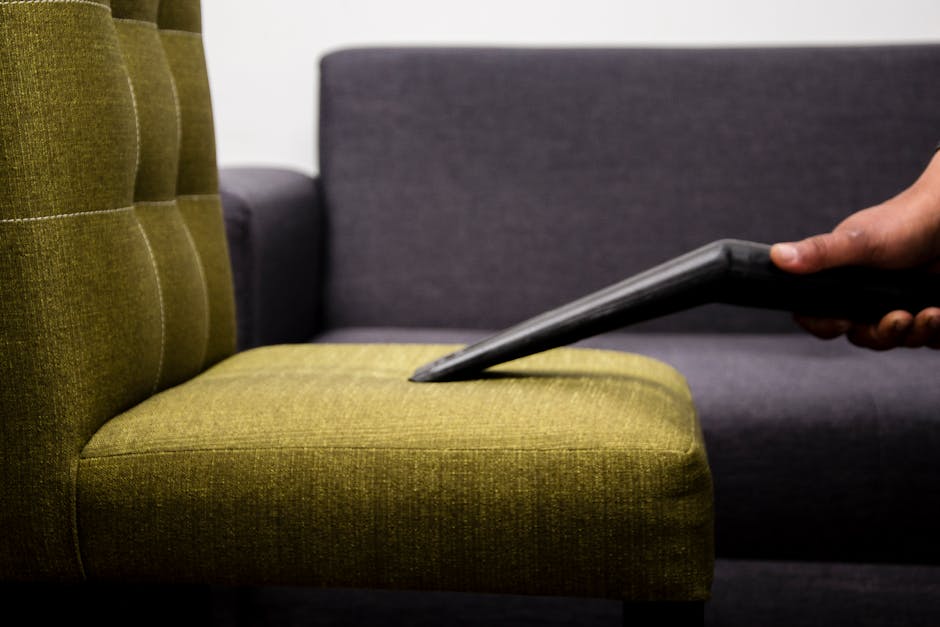
Use a clean upholstery attachment and work slowly over seams, crevices, piping, and under cushions. Dry dust is what turns into grime during cleaning, so removing it first makes everything easier. If you are in a typical Fulham home with compact rooms and not much storage, the furniture may collect dust faster than you think.
3. Test any product in a hidden area
Before you apply anything to the visible face of the fabric, test a discreet spot. Look for colour transfer, texture changes, or watermarking. If a cleaner rushes this step, that is a red flag. Simple as that.
4. Treat stains by type
Food stains, ink, makeup, pet accidents, and body oils all behave differently. Blotting is usually better than rubbing, and over-wetting is a common mistake. A stain that disappears at first glance can still leave a ring later if the moisture is not controlled.
5. Clean with the least aggressive method that works
That is a good rule for upholstery in general. If a low-moisture clean will do the job safely, that is preferable to soaking the fabric. If extraction is appropriate, it should still be carefully managed to avoid pushing moisture too deep into cushions and fillings.
6. Support drying properly
Open windows where appropriate, use airflow, and avoid sitting on the furniture until it is dry. The middle of a damp winter day in London is not ideal for rapid drying, so good airflow matters. If a clean is done late afternoon, it may need a bit more patience overnight.
7. Finish with maintenance
Once the furniture is clean, keep it that way with regular vacuuming, quick spill response, and sensible use of throws or cushions in high-contact areas. Nothing fancy. Just steady habits.
Expert tips for better results
Here are the tips that tend to make the biggest difference in real homes, not just in theory.
- Work from the outside of a stain inward to reduce spreading.
- Use white towels or cloths so dyes do not transfer.
- Blot, don't scrub unless you want to rough up the fibres.
- Don't mix products, especially if you are unsure what is already on the fabric.
- Lift cushions and check underneath because dirt hides in the boring places.
- Pay attention to smell; odour often tells you more than the visible surface does.
- Ask about drying expectations before cleaning starts, not after.
A small but useful habit: take a photo of the furniture before treatment. If the item is heavily marked, a before-and-after comparison helps you spot subtle improvement rather than just obvious transformation. Sometimes the visible change is quieter than you hoped, but the actual hygiene gain is still real.
If you already know your fabric is delicate or the stain has set in, it is usually smarter to choose a cleaner with strong experience in fabric care rather than the cheapest quick fix. For wider home care, you might also look at carpet cleaning or steam carpet cleaning if the rest of the room needs attention too.
Common mistakes to avoid
Some upholstery damage happens during cleaning, not before it. Annoying, but true. Here are the mistakes that cause the most trouble.
- Using too much water: this can lead to long drying times, watermarking, or odour.
- Scrubbing stains aggressively: it can push the mark deeper and roughen the fabric.
- Skipping the test patch: a small hidden spot should always be checked first.
- Using random household cleaners: not every spray is upholstery-safe.
- Cleaning without reading the fabric code: the label is there for a reason.
- Forgetting to vacuum first: loose dirt just turns into mud.
- Sitting on damp fabric: this can distort pile and attract more dirt.
One of the most common real-world problems is trying to fix a stain with half the kitchen cupboard. Vinegar, washing-up liquid, upholstery spray, lemon juice, club soda-people get creative. Sometimes too creative. The trouble is not just whether a product cleans; it is whether it leaves residue or changes the fabric finish.
When a stain is old, set, or unknown, a controlled professional approach is usually safer than a guessing game. There is a place for DIY, absolutely. But there is also a place for letting someone else deal with the more stubborn bits.
Tools, resources and recommendations
You do not need a shed full of specialist gear to look after upholstery well. A modest, sensible kit is enough for routine upkeep.
- an upholstery attachment for vacuuming
- soft white microfibre cloths
- a clean absorbent towel
- a soft brush for light agitation
- a bowl for diluted cleaning solution, if the fabric allows it
- fans or simple airflow support for drying
For most homes, the best recommendation is not a product at all. It is a cleaning plan. Decide which items need regular care, which ones are high-risk for spills, and which pieces should be left to professionals because they are expensive, delicate, or awkward to move.
If you want a fuller refresh, you may find it useful to think beyond the sofa alone. Upholstery cleaning often goes hand in hand with rug cleaning, and in some homes the best result comes from handling both together so the room feels consistent rather than half-done. That is usually how people notice the difference.
And if your home has windows dressed with heavy fabric, curtain cleaning can also help reduce dust and bring a fresher feel to the room. Not essential every time, but worth considering if the air in the room feels a bit stale.
Law, compliance, standards, or best practice
This is a home cleaning topic, so there is no dramatic legal maze to decode. Still, a few best-practice points matter in the UK context, especially when a service provider is entering your home.
Good practice usually means:
- clear communication about what will be cleaned and how
- careful handling of fabrics and furnishings
- appropriate attention to health and safety
- reasonable care around electrical equipment and wet cleaning methods
- transparent terms, pricing, and expectations
For residents, tenants, and landlords, it is sensible to keep records of the condition of furniture where needed, particularly in rental properties. That is not legal advice, just practical common sense. If an item is being cleaned as part of a move-out or inventory process, photos and written notes can save a lot of awkward back-and-forth later.
If you are choosing a service, look for sensible business practices rather than big promises. A trustworthy provider should have clear policies, including things like insurance and safety information, a straightforward health and safety policy, and accessible terms and conditions. Those details are boring until they are suddenly not boring at all.
Options, methods, or comparison table
Different upholstery jobs call for different methods. This table gives a plain-English comparison of the main options you are likely to hear about.
| Method | Best for | Pros | Watch-outs |
|---|---|---|---|
| Vacuum-only maintenance | Weekly upkeep, light dust | Fast, simple, protects fibres | Will not remove deep stains or odours |
| Hand cleaning / spot treatment | Small marks, targeted issues | Controlled, fabric-sensitive | Easy to make a stain spread if rushed |
| Low-moisture cleaning | Delicate fabrics, regular maintenance | Shorter drying time, less saturation | Not ideal for every heavy soil problem |
| Hot water extraction | Many synthetic fabrics, deeper soil | Strong soil removal when suitable | Can over-wet fabric if poorly handled |
| Solvent-based cleaning | Some specialist or delicate fabrics | Useful where water is unsuitable | Needs careful product selection and skill |
If you are not sure which method suits your furniture, the safest answer is to ask for an inspection first. Any decent cleaner should be able to explain why a method is being chosen, not just say, "we always do it this way." That answer is not especially comforting.
Case study or real-world example
A fairly typical Parsons Green scenario goes like this. A family has a three-seater sofa in a bright sitting room, cream fabric, soft pile, and a couple of years of daily use. There is a faint water mark near the left arm, a food stain on one cushion, and a general dullness across the seat area. Nothing dramatic. Just enough to bother you every time you walk past it.
The first step is identification. The fabric is checked, the cushions are inspected, and a hidden test spot is treated. The main issue turns out to be surface soil mixed with body oils, plus one darker stain that has set a little. A light vacuum and careful pre-treatment loosen the grime. Then a controlled cleaning method is used with close attention to moisture levels. The result is not a miracle film-scene transformation. It is more believable than that. The sofa looks brighter, the seat tone is more even, and the room smells cleaner by the afternoon.
The clever part is what happens after. The family agrees to vacuum weekly, deal with spills immediately, and avoid using the sofa as a dining bench on busy school nights. Not perfect. Real life rarely is. But the furniture lasts longer because the routine changed, not just the cleaning.
That is the real lesson here. Good upholstery cleaning is not just about one appointment. It is about making the next problem smaller.
Practical checklist
Use this checklist before cleaning starts, or before you book a professional.
- Check the fabric care label if available.
- Vacuum all upholstery surfaces, seams, and cushions.
- Identify any stains, odours, or areas of heavy wear.
- Test a hidden area before using any solution.
- Confirm whether the fabric needs low-moisture, extraction, or specialist treatment.
- Protect floors and nearby surfaces from drips or overspray.
- Make sure there is enough airflow for drying.
- Keep pets and children away until the item is dry.
- Ask how long the furniture is likely to take to dry.
- Review aftercare instructions and follow them properly.
Quick reminder: if the fabric is fragile, antique, or emotionally precious, err on the side of caution. A careful clean is better than a brave one.
Conclusion
Parsons Green upholstery cleaning for Fulham homes is really about preserving the things you already own and use every day. A sofa, chair, bench, or footstool might not seem precious until it starts looking sad or smelling stale. Then suddenly it matters a lot. The best results come from understanding the fabric, choosing the right method, and avoiding the usual mistakes that cause damage or wasted effort.
If you remember nothing else, remember this: clean gently, test first, dry properly, and do not wait until a small stain becomes a permanent fixture. That one habit alone saves a lot of grief.
For homeowners, tenants, and landlords alike, the smart move is usually to combine regular upkeep with professional help when the fabric needs more than a quick tidy. Your home will feel calmer for it. And honestly, that clean, fresh-room feeling when you sit down in the evening? Hard to beat.
Get a free quote today and see how much you can save.
Frequently Asked Questions
How often should upholstery be cleaned in a Fulham home?
For most homes, a light maintenance routine every week and a deeper clean every so often is sensible. High-use sofas, homes with pets, or family spaces may need attention more regularly. If the furniture starts looking dull or carrying odour before that, do not wait on a fixed schedule.
Can I clean upholstery myself?
Yes, for light maintenance and small fresh marks, careful DIY cleaning can work well. The key is to know the fabric type, test first, and avoid over-wetting. For older stains, delicate materials, or large pieces, a professional approach is usually safer.
What is the safest method for delicate fabric furniture?
That depends on the care label and the textile itself, but low-moisture or carefully controlled specialist cleaning is often safer than heavy saturation. Vintage, natural, or textured fabrics should be handled conservatively.
Why does my sofa still smell after cleaning the visible stain?
Because odour can sit deeper in the fibres, cushions, or filling. Surface cleaning may remove the mark but not the source of the smell. In those cases, a more thorough treatment or a specific odour-focused process may be needed.
Will upholstery cleaning remove all stains?
Not always. Some stains are permanent, some have set over time, and some react badly to heat or DIY treatments. A good cleaner can usually improve appearance significantly, but no one should promise perfection on every mark.
How long does upholstery take to dry?
Drying time varies depending on fabric type, room temperature, airflow, and how much moisture was used. Light cleaning can dry faster, while deeper extraction methods may take longer. Good ventilation helps more than people expect.
Is upholstery cleaning worth it before moving out?
Often, yes. If the furniture is part of the property or there is a tenancy arrangement that requires it, a clean can help the place present better and avoid end-of-tenancy disputes about wear and visible soiling. It is worth checking expectations early.
Can professional upholstery cleaning help with pet hair?
Yes, though it should start with thorough vacuuming and fibre-safe removal methods. Pet hair often sticks in seams and textured weave, so a surface wipe alone rarely solves it. Odour is a separate issue and may need specialist treatment.
What should I ask before booking an upholstery cleaner?
Ask about the fabric methods they use, how they test for colourfastness, how long drying usually takes, and whether they can handle stains or odours specific to your furniture. Clear answers are a good sign. Vague ones, not so much.
Does steam cleaning suit every sofa?
No. Steam or hot water extraction can be useful on some synthetic fabrics, but not every material can tolerate that approach. Delicate, water-sensitive, or vintage pieces may need a different method entirely.
How do I keep upholstery cleaner for longer after treatment?
Vacuum regularly, deal with spills quickly, rotate cushions if possible, and keep the fabric out of heavy direct wear where you can. A few small habits make the next clean easier and keep the furniture looking better for longer.
Where can I find related cleaning services for other soft furnishings?
If you are refreshing more than just the sofa, it can help to look at options such as curtain cleaning, mattress cleaning, and carpet cleaning. Coordinating the whole room often gives a better overall result than tackling one item in isolation.